SaaS platform for online stores · 2026 — present
Commerce SaaS Platform
A product in active development that helps merchants set up, customize, and run their own online stores.
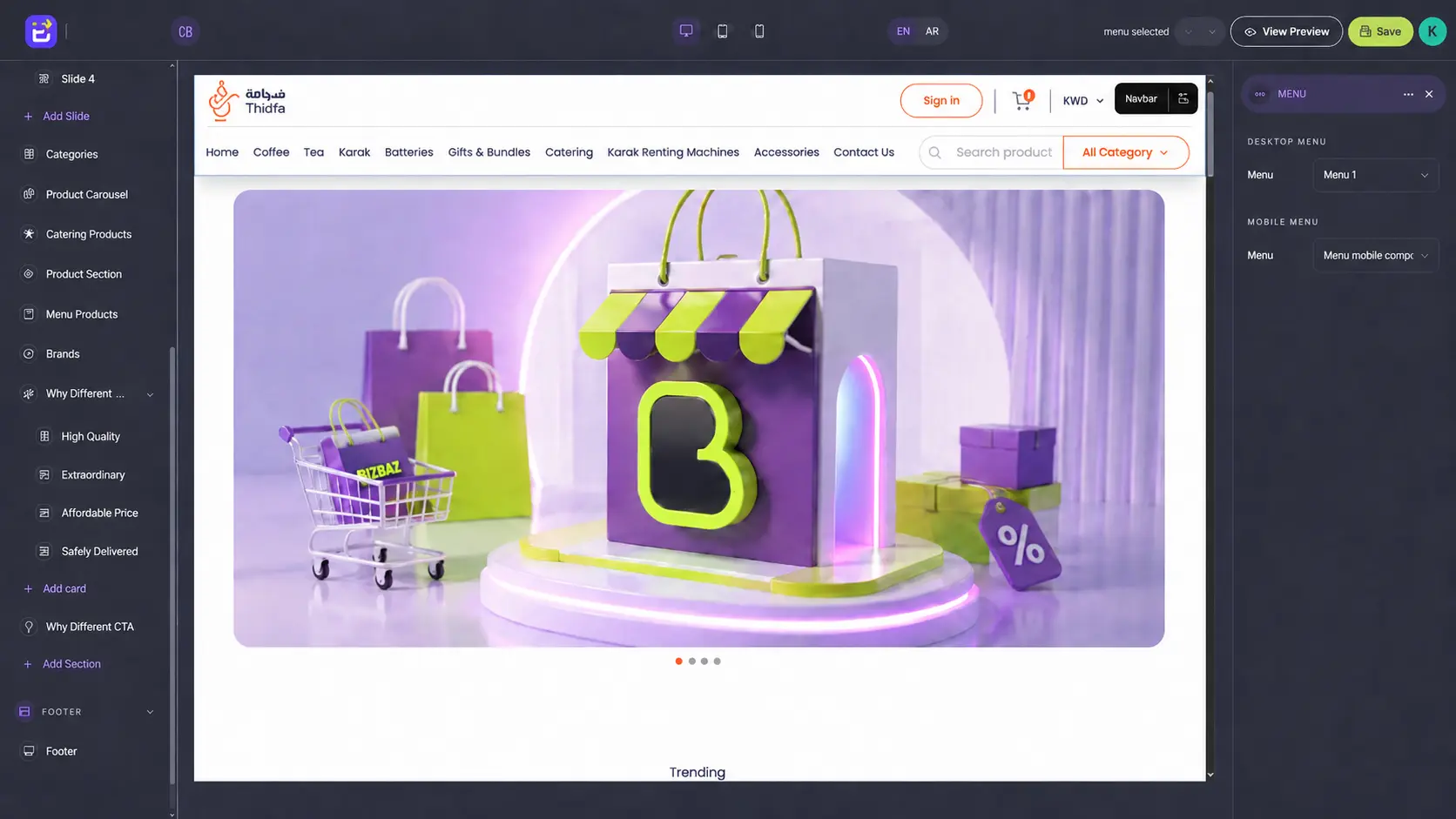
Inside the product
The brief
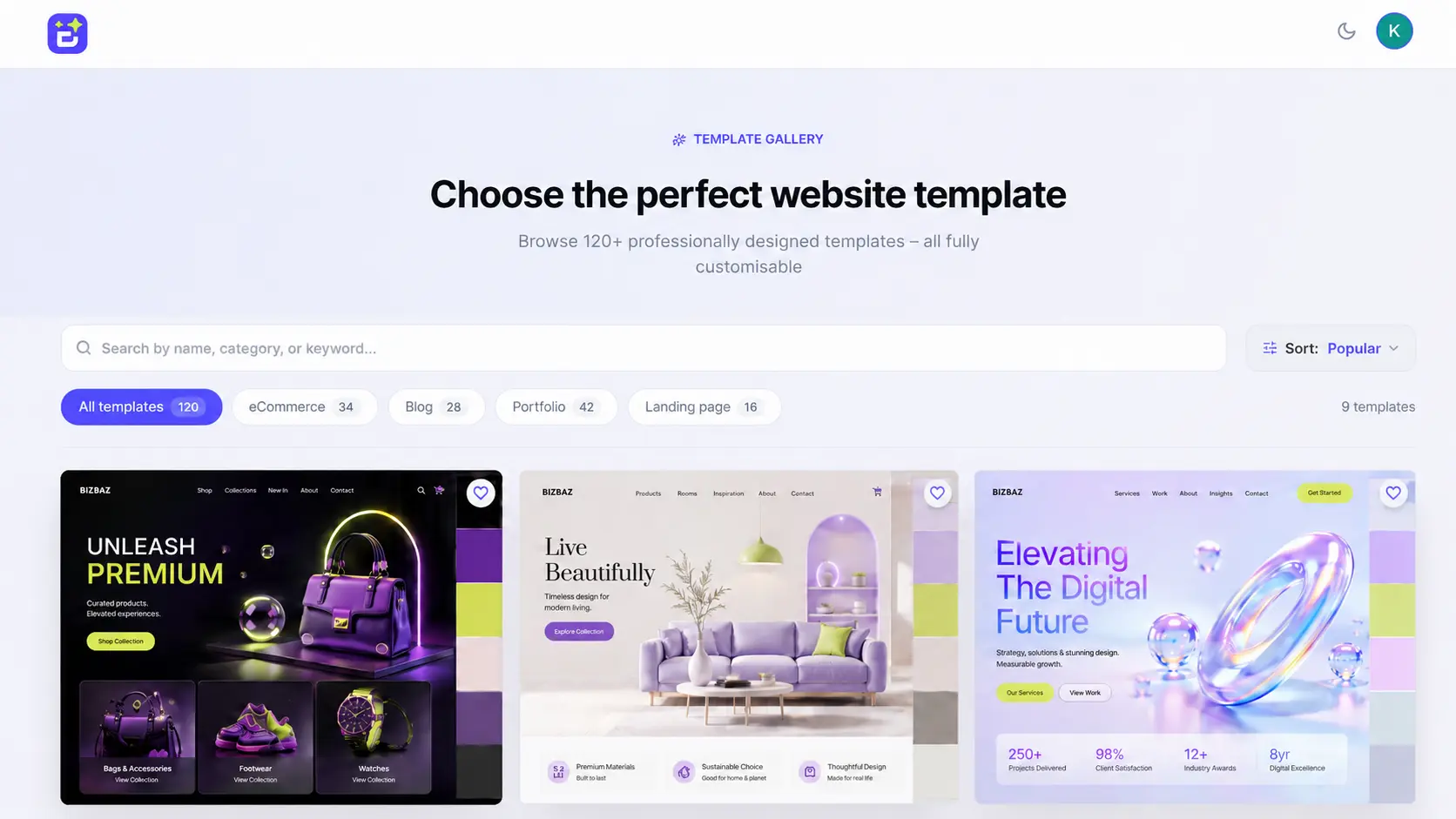
The platform gives businesses one connected flow for setting up a branded online store: choose a template and plan, manage billing, customize the storefront, and get ready to launch. I work across the admin platform, merchant experience, billing, and store builder.
What was at stake
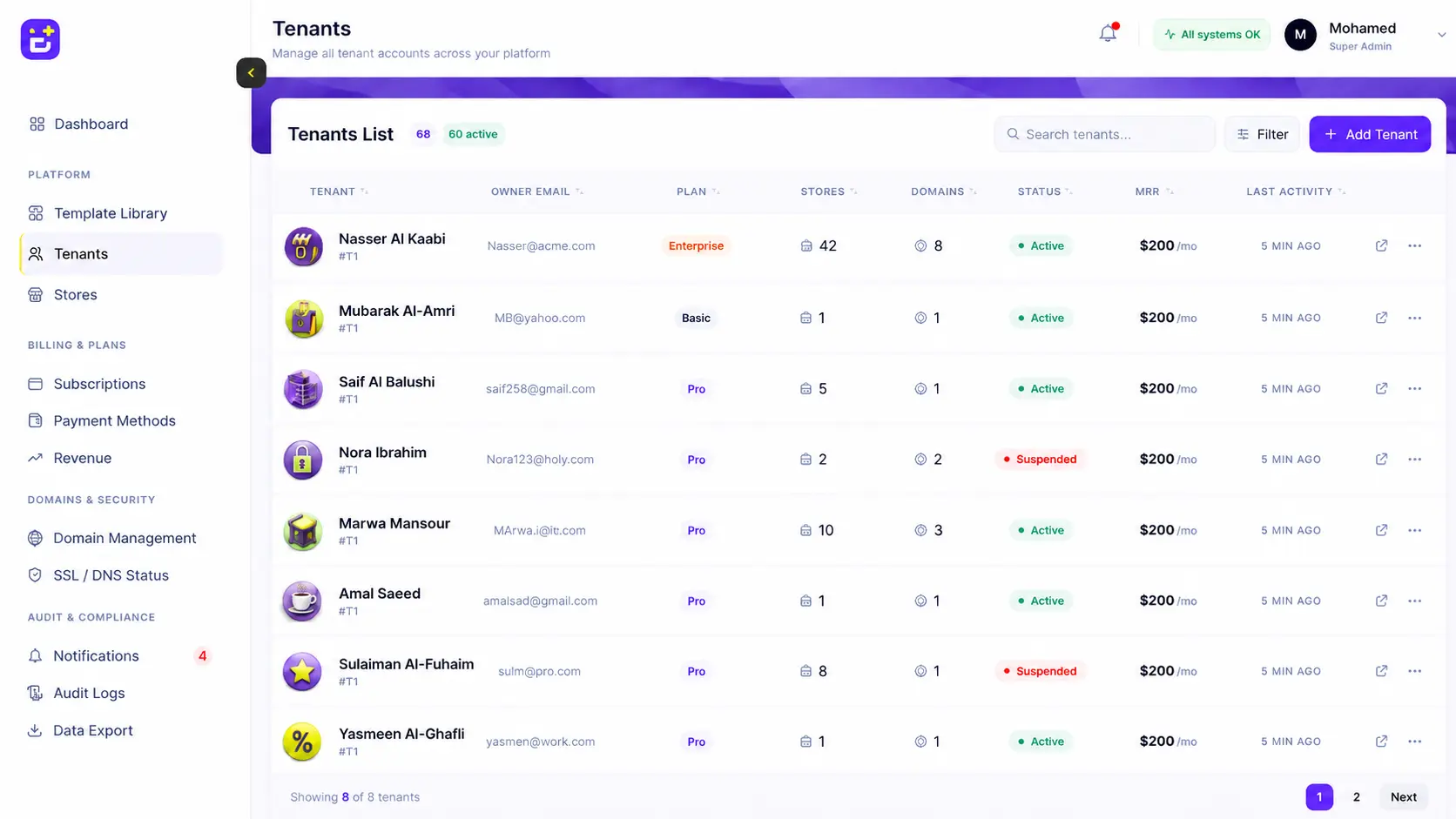
One codebase serves three very different users at once: platform admins, merchants building stores, and shoppers on the storefronts. Billing, permissions, and provisioning must stay in sync — if a merchant's renewal fails, they should reach a clear, recoverable state, not a broken store.
What I engineered
- Role-based access control with access groups and permission-aware UI across every admin flow.
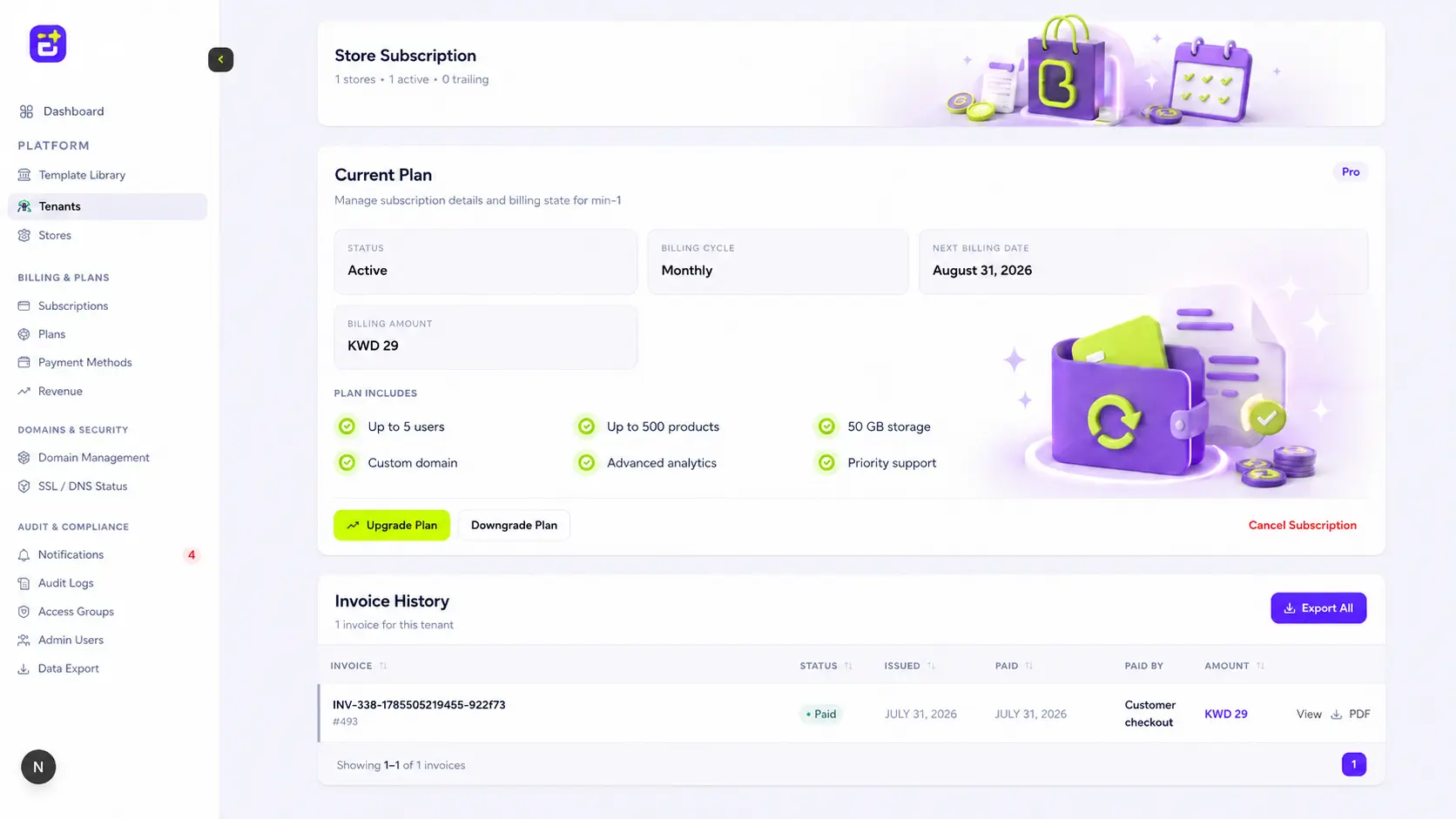
- The full billing lifecycle: plans, saved cards, payment attempts, renewal invoices, failed-payment recovery, and store-level suspend/resume — integrated with MyFatoorah.
- A multi-step onboarding wizard that saves drafts and streams provisioning progress live over Server-Sent Events.
- The merchant store builder: editable sections, rich text, EN/AR drafts, product pickers, live preview, and theme publishing to the storefront.
- Platform infrastructure: Docker, Traefik routing, Redis, MinIO object storage, shared database configuration.
Where it landed
- The current product connects template selection, billing, store setup, and storefront editing in one flow.
- Billing edge cases — failed renewals, expired cards, and suspensions — have defined, recoverable product states.
- Storefront content can be edited in English and Arabic from a single builder workflow.
Building something at this level?
Tell me about your project — I reply within a day.